
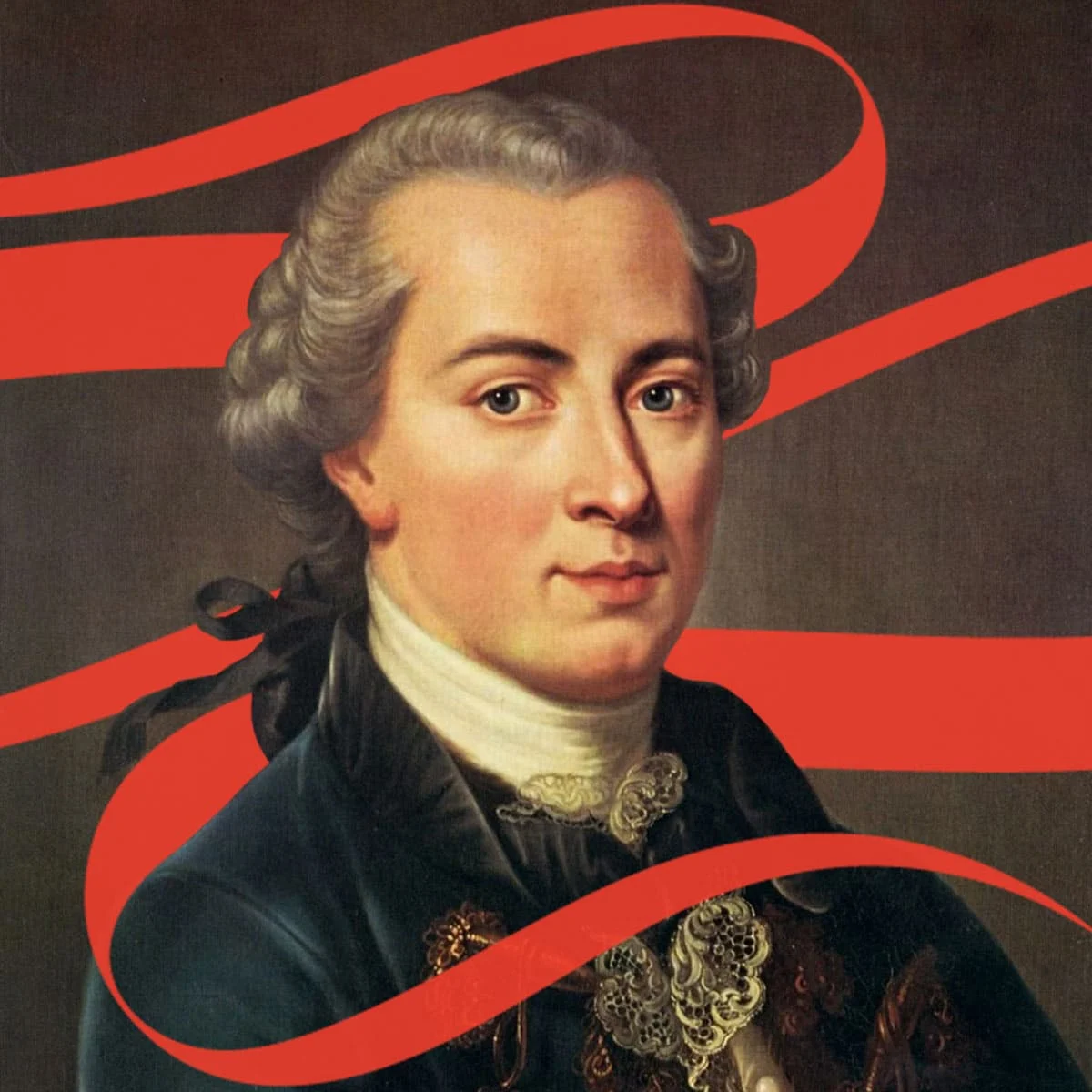
The Prussian Immanuel Kant was a groundbreaking philosopher. Kant’s metaphysics was monumental in that it provided system of thought that bridged the gap between the combating views of his time. Metaphysics-wise, my best interpretation of Kant’s transcendental idealism is that it mixed the views of the empiricists, who thought that the only perception of the “true” world could be achieved through their senses, and the realists, who believed that there was a mind-independent external reality.
Kant bridged the view between the two with his term of Transcendental Idealism. So why is it called Transcendental, and what the heck does that mean? Kant called his metaphysics Transcendental because he believed that it went beyond, i.e, transcended, the empirical structures of our mind that make perception possible. Instead, Kant focused on the a. priori, (without sense, perception) structures of our brains.
Kant argued that things only appear to us because we perceive them as such, and therefore we have not real sense of the outside world. Instead, what is delivered to us is twisted and altered by our mental structures. This is an important distinction, between things as they are in themselves (Noumena), and things as they appear to us (Phenomena).
Kant, who had been influenced by physicists of his generation, realized that the processes of the mind were more than pure sensations, as empiricists argued. He proposed the existence of structures within the mind that altered the true reality of objects, arguing that the conscious subject (humans, us) recognizes the object not how it truly is (in reality), but how it appears to us in the cognitive conditions of our sensibility. Therefore, we can have no true idea of the external reality as we can never perceive outside, or without our mind.
Key to this argument is Kant’s perception of space and time, which he believes is not part of objective reality, but rather a priori. This is an interesting and seemingly counterintuitive view, but it makes sense if you assume that they are fundamental structures of the mind (intuition), not part of experience, and definitely not things-in-themselves. With this view of space and time, Kant posits that they are Phenomenal, not Noumenal. The purpose of space and time are organizing perception of the external world. This can be hard to wrap your hear around, but you can think of space and time as axes where thoughts are then plotted onto, or like filters through which the sand of our thoughts is passed through.
Transcendental Idealism, and it’s birth in the book Critique of Pure Reason is often considered Kant’s Magnum Opus, for how it lays out a system of thought that nimbly recognizes the existence of a real, untouchable external reality while not falling into the trap empiricists did when they decreed that intuition is purely perception of a real world. Kant’s system of metaphysics provides an understanding of how knowledge is possible, even within the known limitations of human experience.