
Modern-day philosophers are faced with two significant problems: that of the hard problem of consciousness, and that of the hard problem of matter. Although the first is more well-known, both wreak havoc on any current understanding of the universe. In this post, inspired by the incompatible theories of panpsychism, materialism, dualism, and functionalism, I will begin an attempt to make sense of the philosophical and scientific madness the first problem has wreaked upon modern understanding.
The hard problem of conscious experience arises when we consider the qualitative, first-person subjective sense we all experience when perceiving the world. This can be likened to the “first-person movie” we perceive the world as. We describe our experience as this all the time: when we say the “movie” or “story” of our lives, we assume ourselves to be the protagonist through whose eyes the rest of the world is seen. The subjective bits of life, what make our reality ours, are what philosophers and scientists call “qualia.” The study of qualia is inherently contradictory, at least in a scientific way. Applying the scientific method—a third-person view—to the first-person view of the universe we obtain makes no sense. If we could understand our subjective experience in an objective way, it wouldn’t be subjective in the first place.
This is what makes the hard problem so hard: it is beyond the reach of scientific innovation. Of course, many object and say, “We just haven’t found a way to do that yet. In the future, science will adapt, and with it, we will be able to understand things we could never fathom in the past.” Admittedly, I thought along similar lines. To illustrate why this answer is incorrect, I will bring in the example of humanoid robots. Let’s compare the two (developing humanoid robots and understanding consciousness). Currently, we can do neither. Making fully automated humanoid robots is beyond the grasp of our current engineering capacities; however, it is quite conceivable that in the future, automated humanoid robots will be able to clean our dishes, deliver our packages, and make our beds. The technology is just not quite there yet. Therefore, we are purely limited by technological advancement, not conceivability. Now, think about the hard problem of consciousness. We cannot even conceive of a way to understand subjective experience from a third-person point of view. The phenomena all of us experience—what makes us us—are, in fact, out of reach. An important distinction is that technological advancement will not solve this problem. Unless you are a hardcore materialist and believe that consciousness develops purely from mechanistic brain processes, one could posit that we could understand everything about the brain and still have no clue what gives us subjective experience.
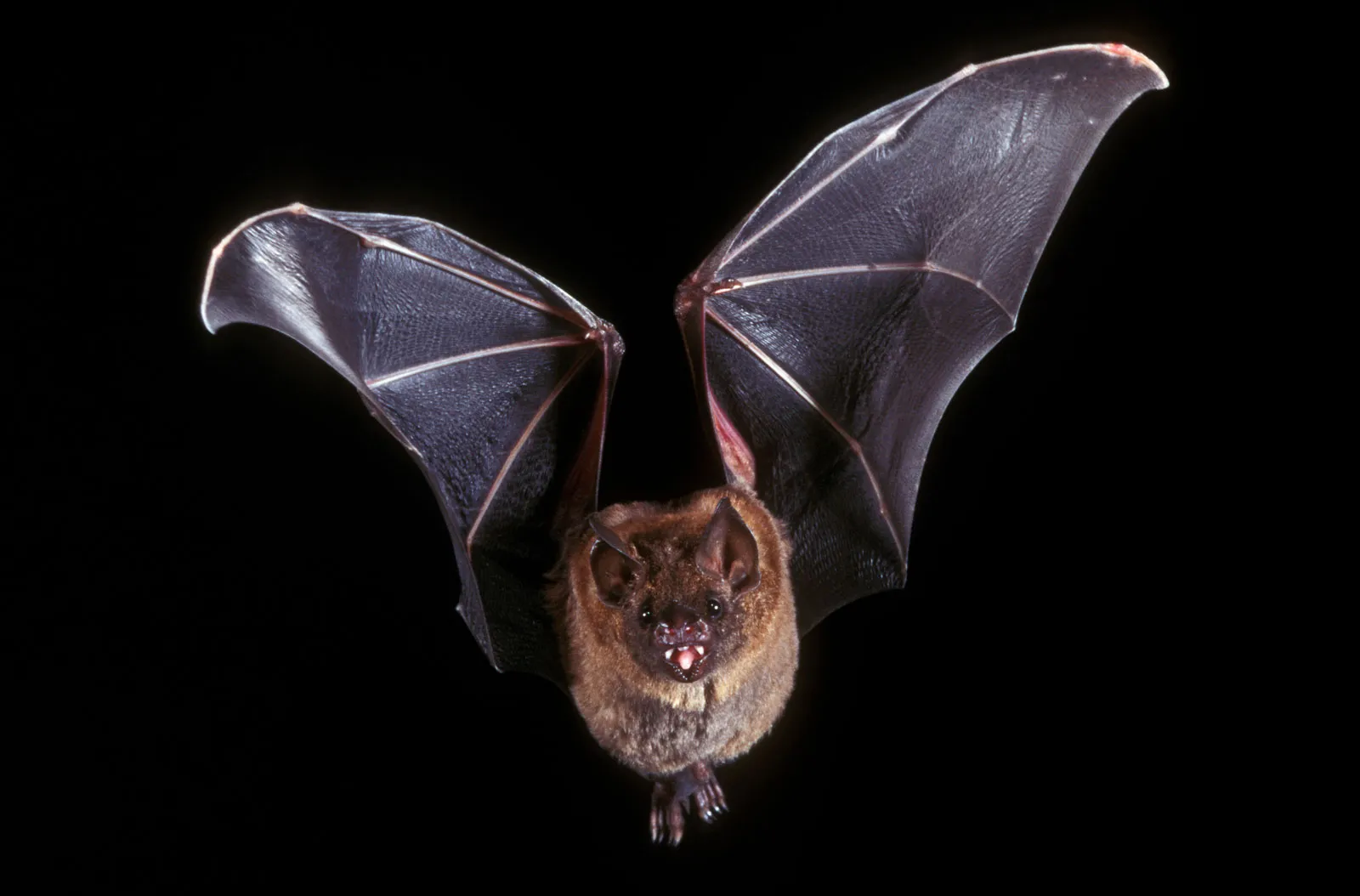
Philosopher Thomas Nagel defined the problem in his well-known argument, What is it Like to Be a Bat? Nagel arrives at a similar conclusion. He defines consciousness as the fact that there is something to “be like.” So we could say a bat is conscious, as there is something it is like to be a bat. We can posit that a rock, an ant, or a tree, on the other hand, has no “what it is like to be.” Notice I say posit, not prove, though, as he believes we can never directly experience what it is like to be a bat. Sure, we can think about what it is like to have echolocation, we can pretend to be flapping around in the dark, or we could even put on a VR headset that makes us think that we are a bat. But we can never, on a fundamental level, understand what it is actually like to be a bat.
I’ll give two examples to illustrate this idea. First of all, the namesake of this blog, Kant, distinguished between phenomena (what we perceive things to be) and noumena (the actuality of things in themselves). In the same way noumena are inaccessible to us, the qualia-filled perspective of a bat, for example, cannot be interpreted directly without turning it into simply phenomena, as to understand it we have to perceive it first. This might not have been the best example. Hopefully, this next one makes more sense. First of all, try to imagine a new color. You can’t. It is outside of human capability. In terms of colors, all that we perceive is influenced by our past perceptions of colors. We can try to blend colors in a revolutionary way, but to actually think of the “newfound” color we have created, we would have to think back to colors we have already seen. If you still aren’t convinced, I challenge you to try it for yourself. We can compare the process of trying to imagine a new color with trying to conceive of the world through a bat’s eyes. Both illustrate the insurmountable barrier between our own subjective experience and the truly alien perspective of another conscious being. We can try to imagine what a bat would perceive the world to be, but in doing so, we cannot eliminate the way that we, as humans, perceive the world. We can never get rid of our own subjective experiences; therefore, it is not a technological but a truly insurmountable problem to attempt to gain the perspective of anyone who is not us.
This leads us to another question: what are the limits of science? If science leaves us empty-handed in terms of understanding something as basic as consciousness, what else can science not prove? Science has served as the dominant form of understanding since the advent of inductive reasoning with Sir Francis Bacon. It also benefits from the fact that it is both generalizable and empirical. While high-level science is certainly not easy to understand, one could posit that if everyone were given the same educational level as, let’s say, the Nobel Prize winners in physiology/medicine, physics, and chemistry combined, they could plausibly understand the methods behind and results of scientific proofs. These days, we think of knowledge as synonymous with proved-by-science. But if science cannot explain consciousness, we have two options: either surrender and admit that the hard problem is unsolvable, or start trusting in different types of knowledge. I propose the latter.