
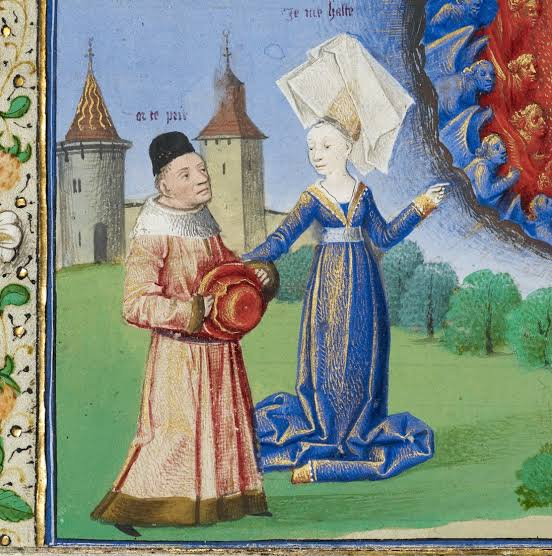
Boethius was a 6th-century Roman philosopher best known for his work The Consolation of Philosophy. Interestingly, Boethius wrote this work while in prison. He was imprisoned under the charge of treason by the Ostrogothic King Theodoric and was awaiting execution. His text was written with the purpose of finding intellectual and spiritual consolation in the face of injustice and suffering.
In this text, Boethius wrote on everything from free will to morality to fortune. He states that happiness is the ultimate goal of human existence, but the ways that we are accustomed to deriving happiness—such as riches, honors, fame, and pleasure—are false and only partially satisfying. Like many other philosophers, he posited that true happiness can only be gained from a religiously virtuous life. To him, the true good must be perfect, infinite, and self-sustaining, i.e., divine. Therefore, true happiness can be attained through a life of connection with God. Additionally, happiness must come from within. External happiness is reliant on fortune, which is fickle and cannot be trusted. Therefore, an innate connection with God must be the way one derives happiness.
I think the most interesting part of Boethius’s work is his interpretation of the problem of evil, which is the classic question: “How can an all-powerful God allow evil and suffering to exist?” This question normally traps believers in a dilemma. On one hand, one can admit that evil exists, but by doing so they question the truth of the claim that God is all-powerful, all-loving, and all-knowing. The other path is to retain the belief that God is omnipotent and then attempt to redefine evil in some way. Some ways philosophers and theologians throughout time have done this include invoking the idea that God has a master plan, stating that God chooses to give people free will (which is somewhat of a loophole, not entirely sound), or claiming that God only saves those who pray to Him. All of these approaches have clear logical problems. For example, saying that God has a master plan removes power from human hands and is inherently unprovable and illogical. I think Boethius poses a really interesting answer to this age-old question.
Boethius takes the second route, meaning he attempts to define what evil really means. He does this by invoking his concept of fortune that I briefly mentioned earlier. His idea of fortune rests on what true good and true evil are. As true good is union with God, true evil is derived from unholy, worldly pleasures that are inherently unstable. Boethius claims that we have a flawed conception of what evil and good are—in fact, we have it backwards. We often see happiness, wealth, power, and pleasure as things that are “good.” However, even though it looks like the wealthy are gaining power and success, they are really just enslaved by power and corruption, and therefore stray further away from God in the process. So evil people don’t truly get away with it—they harm themselves most of all. On the other hand, truly virtuous people may lose their wealth, freedom, or even life, but they are truly in union with God, and thus they cannot be harmed by fickle misfortune.
Boethius’s position in prison most definitely influenced his outlook on life. As a political prisoner about to be executed, he needed a way to reconcile the problems in God’s world with the situation he was in. So accepting that humanity has a flawed conception of what really defines good and evil makes sense as a way to deal with his current situation. However, his idea, although possibly logical, is extremely counterintuitive. With modern science, we know as fact how happiness arises—with chemicals in the brain. Can we so quickly dismiss this empirical evidence that happiness—as we know it—arises from something that is not just union with God? Or is this a simple misinterpretation, a fallacious cover-up for the true good? The truth is up in the air.