
17th century philosopher and mathematician Rene Descartes has one of the most famous one-liners in all of philosophy: “I think, therefore I am”. But how did Rene Descartes get to this revolutionary conclusion? The answer lies in a 6 part book titled The Meditations. Descartes was a rationalist, meaning he saw reason as the chief way to experience the world. Thinking reasonably, Descartes discovered how little he could actually prove about his life. This was part of a process called Radical Doubt. Descartes doubted everything, and when I say everything, I mean everything. He doubted the existence of other people, God, and even the reliability of his senses and perception of the world. He concluded that even though many of the things he had doubted were what he had accepted his whole life, he had no way of proving they were in fact true. The only thing, Descartes concluded, that he could trust without a doubt were his own thoughts. If you are confused, I was too. This is the thought experiment Descartes uses to draw that conclusion.
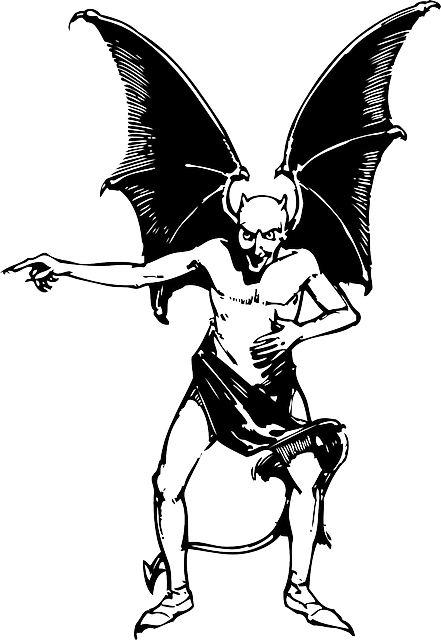
Imagine that there is an Evil Demon controlling your every action. This Evil Demon is all knowing, all powerful. He can control everything, and the scope of his power goes beyond the human mind. Descartes concludes that an Evil Demon could be controlling all of us currently. Since the demon is so powerful, there is no way to disprove the existence of the demon. The Evil Demon can be deceiving us into seeing an external reality, hearing other people, tasting different flavors, it could be deceiving you into reading this post right now. Point is, anything that you experience can be influenced by this demon and there is no way to disprove the fact. As mentioned above, the only thing outside of the influence of the demon is our own thoughts. Therefore, they are the only things we can trust. Cogito, Ergo Sum: I think, therefore I am.
From the existence of his own thoughts, Descartes proves that the mind and body are fundamentally distinct, that God exists in two ways, and finally that the external world exists.