
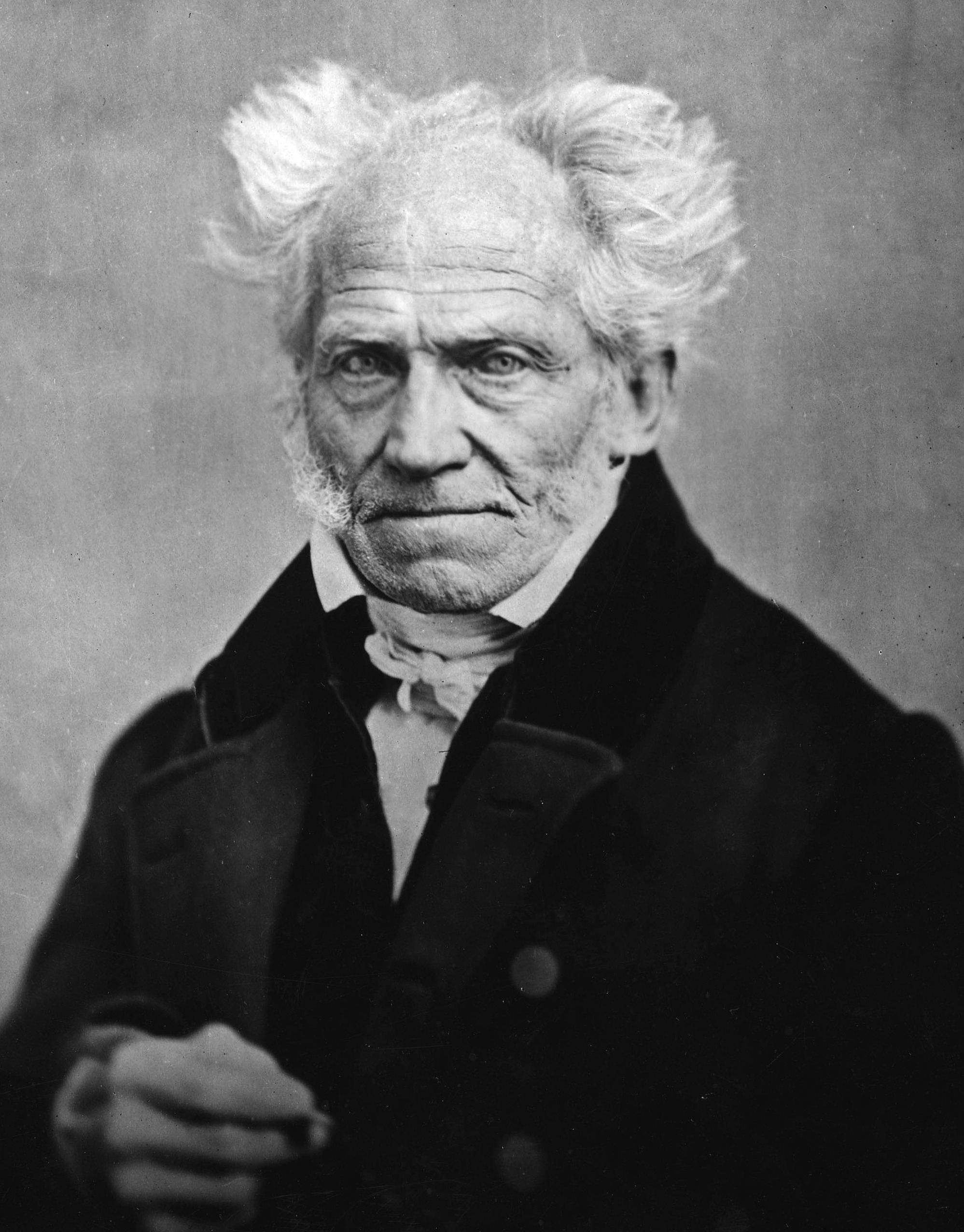
Like so many great thinkers, the German philosopher Arthur Schopenhauer was largely unknown and unpopular. His greatest work, The World as Will and Representation, was developed as both a continuation and critique of the works of his predecessor, Immanuel Kant. If you haven’t already read my article on Kant’s Transcendental Idealism, it might be helpful to understand.
The first line of Schopenhauer’s magnum opus states: “The world is my representation.” This is a distinctly Kantian idea. Transcendental Idealism established the difference between the noumena, or “things-in-themselves,” and phenomena, or what we actually perceive. Kant posited that we can never experience noumena, only the phenomena. By stating that the world is his representation, Schopenhauer is basically building on this distinction between reality and perceived reality. Perception is through the mind, and Schopenhauer remarks that the reality presented to him is merely a representation.
While Kant regarded noumena as things strictly outside the realm of human perception, Schopenhauer proposed that noumena is a striving, immutable, and omnipresent force called the will. Note that this is not the human will. In fact, Schopenhauer would probably refer to the human will as intellect, and he stated that the omnipresent will of the outside world is in fact in control of the intellect. The concept of the will is what Schopenhauer is best known for. The will permeates everything in the world, including us, nature, animals, etc. Ultimately, everything in the world is just a representation of the will itself. The will drives all human actions and desires, and is insatiable, meaning it can never be satisfied or fulfilled. This is a feeling many of us have—there is always the next goal or flashy thing to chase after. Schopenhauer would call this the will talking. It is an irrational sensation of striving that can never be fulfilled—and therefore will lead to constant suffering in pursuit of an ultimately impossible goal.
The will is the foundation of the world, but there is also a specific will—the will to live—that especially drives us. This will, to extend our ironically pitiful lives, is what unconsciously drives our every action. It may feel like we, the intellect, are in control of our lives, but that is not the case. It is the will, with the intellect in tow. The will for self-preservation is acutely perceptible in the animal kingdom, but the same desires are in us as well. However, as we have greater power of cognition, the only difference, in Schopenhauer’s opinion, is that we have developed more mechanisms to convince ourselves that we are in control of the real reasons we do things. We aren’t; we do what we do to avoid death.
While death cannot be avoided, as everyone is mortal, death for future generations can be avoided by protecting one’s offspring and sacrificing themselves for the success of said offspring. Compared to the animal kingdom, where it is sometimes custom for the female to consume the male for nutrients after propagation, Schopenhauer describes that the life of man (or woman) decreases after intercourse, as then the focus of it shifts purely into providing and protecting for the offspring’s battle against the will, and the cycle repeats.
As I am sure you can tell, Schopenhauer was a deeply pessimistic philosopher. What he has described represents a life of suffering, where the only goal is to evade death. But it gets worse, as the will is inherently insatiable. Any shred of happiness we have is eaten up by the will, which then demands more. Humanity is trapped in a complete cycle of dissatisfaction and eternal striving. Here we depart from the animal kingdom. Whereas animals, with their lower forms of consciousness, are completely and utterly fixed on their will to live, humans deny this simple fact and see their lives as worth more than just reproduction and protection of offspring. This makes us, and especially those who have a grander capacity for reflection, memory, and anticipation for the future, even unhappier. We partially transcend the will to live due to our conception of intellect, but it comes back to bite us in a constant cycle of dissatisfaction. Whereas we think we are escaping the cycle with our intellect, we are purely feeding into it. The intellect is just a formulation of the will itself.
So is life condemned to be an eternal cycle of yearning into success into eventual dissatisfaction? Schopenhauer posits that life doesn’t have to be like this. We can escape the cycle in a few ways. The first is letting go of the quest for pleasure, which is a Buddhist ideal. If we stop the impetus of the cycle, which is the desire for satisfaction, we cannot be trapped in it when we ultimately yearn for more. But letting go of satisfaction and living a life of asceticism is something not many of us want to do. It seems contradictory. How can letting go of the chance for happiness make us happier in the future?
There are other ways to escape the cycle. Schopenhauer says it can be done by engaging in art or philosophy, disciplines that allow the body to appreciate aesthetic beauty. By doing this, the body can temporarily let go of its desires, i.e., escape the will. It’s like how in Stranger Things Max uses music to escape Vecna’s pull from the Upside Down. But like the show, this solution is only temporary, as one cannot spend their whole life entranced in art. Maybe you could these days, by constantly listening to music or watching TV, but you would probably be desensitized to it at some point.
The most practical way to escape the cycle of suffering is just to lead a life based on compassion, not the will to live. Once one recognizes the shared suffering between all of humanity, they can adapt to grow empathy, which in turn can alleviate the suffering that is brought upon by ego-driven desires. Once we live a life driven not by reason and duty, as Kant would advocate, but by compassion, we can escape suffering. But the first step is realizing the persistence of suffering in our life. Part of our struggle is a constant comparison of us against others, of one pleasure devolving into a dissatisfaction due to never-ending striving. If we develop empathy for one another, we can escape this dilemma.