
Category: Ethics
-
Singer’s Drowning Child: Close but no Cigar

Peter Singer is perhaps the most famous currently-living philosopher. His views are vast, with implications in bioethics to universal poverty. Perhaps one of his most famous works is the Drowning Child thought experiment, in his 1972 book Famine, Affluence and Morality. The argument offers a very convincing reason for why we should live a more Read more
-
Life Worth Living: Parfit’s Repugnant Conclusion

The mere addition paradox was a thought experiment devised by the late and great analytic philosopher Derek Parfit. The problem in population ethics pushes us toward a conclusion that seems deeply counterintuitive—so much so that Parfit famously labeled it “repugnant.” In this paper, I will attempt to show that while total utilitarianism succumbs to Parfit’s Read more
-
Kant Stop Thinking Post #50: the Cheerful Doctrine of Antinatalism

In honor of the 50th post on this blog, I’ve decided to write about a topic each one of us has vividly encountered in our lives: antinatalism. Antinatalism, put briefly, is the philosophical idea that bringing life into the world is downright unethical. That’s right: all of us were wronged when we were placed into Read more
-
Plato’s Euthyphro: What do we Define as Good?

Meet Joey. Every day, Joey’s mom drives him and his sister to kindergarten. As Joey jumps out of the car, his extremely religious mother tells Joey and his sister to “be good people.” Joey takes his mom’s advice: he says his pleases and thank-yous, avoids conflicts, and manages his time well. His mother continues to Read more
-
Evading Parfit’s Trap: The Non-Identity Problem Revisited

Derek Parfit’s non-identity problem is one of the most famous in the branch of philosophy called population ethics. In short, Parfit challenges the commonly held belief that present day actions can harm future generations. Here is how Parfit does it: The Problem Premise 1: If an action determines existence, there’s no alternative where that same Read more
-
The Joy of Suffering

Suffering is an essential part of the human condition. From physical pain to emotional anguish, every human is bound to undergo suffering sometime in their life. Although suffering is often perceived as a grave but unavoidable fact of life, a world without suffering is much more terrifying. Without the trials and tribulations I endure in Read more
-
The Non-Identity Problem (Parfit, 2/2)

In yesterday’s post, I talked about the paradoxical non-identity problem, which leads to the absurd conclusion that some immoral actions, like purposely polluting the planet or attempting to give your child a horrible disease, actually cause little harm. In case you forgot, here is the standard layout of the argument: An action only harms a Read more
-
The Non-Identity Problem (Parfit, 1/2)

Let’s talk about Joe and Josh. Both are 15-year-old teenage boys, but unfortunately, their childhood years have been plagued by countless surgeries and hospital visits. Both have rare cases of cystic fibrosis, and it is unlikely that their conditions will be cured in the near future—both will continue to lead lives of pain and struggle. Read more
-
Would you Still Love me if I was an Alien?

Your girlfriend of 10 months tells you she has some news. She looks scared: “I’m pregnant,” you fear she says, yet the truth is much worse. She tells you that she was born on a colony on Mars—and thereby has alien DNA. You freak out, tell her to leave, block her number, and ghost her. Read more
-
Actualism vs Possibilism in Ethics

There is an age-old debate with regard to ethical decision making. It goes like this: suppose there is a teacher—Mr. Gray—who is asked to write a letter of recommendation for an amazing student of his, Asher. Mr. Gray is faced with three options: he can A) accept Asher’s request and write the letter, B) accept Read more
-
You’ve heard of Cultural Relativism. But what about Temporal Relativism?

If you’ve ever talked about morality, there is a good chance you’ve heard the terms moral relativism or cultural relativism. Moral relativism is the overarching stance that morality is relative, i.e., one cannot declare that certain actions are immoral (like killing). Cultural relativism takes this to an extreme, stating that morality can only be judged Read more
-
Advertisements: a Fine Line between Manipulation and Money

Consider the last sports game you watched. Off the top of your head, what percent of the advertisements preached a product that is known to be unhealthy for you? Social Media? Coors? Smoke products, fast food, weight-loss drugs? Consider the last time you scrolled on social media. How many advertisements were there? If you can’t Read more
-
Critique of the Categorical Imperative

Disclaimer: Read The Categorical Imperative before reading this. Kant’s Categorical Imperative offers a reason-based way to make the right decisions within its formulations. However, there are some clear issues with solely relying on the CI. If we remind ourselves of the first rule of the CI, that one should not do any act that could Read more
-
The Categorical Imperative
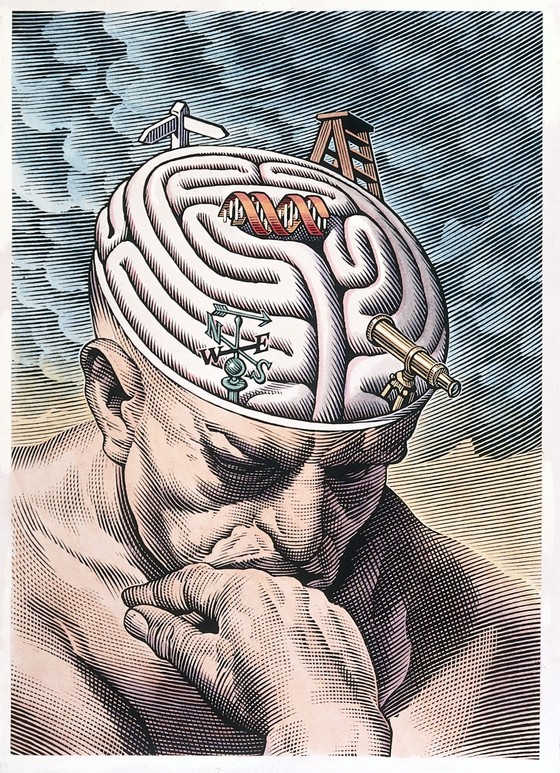
Kant thought that morality must be defined in reason. To do this, he emphasized the only thing that humans actually have control over—the intentions, not the outcomes, strictly rejecting a consequentialist approach. Kant’s ethics, widely referred to as deontology, means duty based ethics. This implies that a deontology-based ethical approach emphasizes a duty that moral Read more
-
The Puzzle of Retributive Justice

One of the first things we are taught about justice is the phrase “an eye for an eye.” The phrase, which dates back to Hammurabi’s Code in 1750 BCE, is an example of retributive justice: the intuitive theory that those who have done wrong deserve to be repaid in kind. Instinctively, most of us agree Read more