
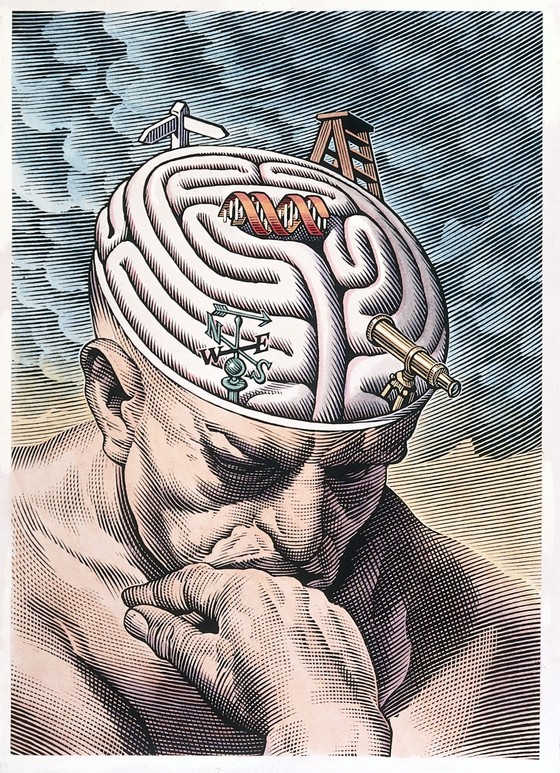
Kant thought that morality must be defined in reason. To do this, he emphasized the only thing that humans actually have control over—the intentions, not the outcomes, strictly rejecting a consequentialist approach. Kant’s ethics, widely referred to as deontology, means duty based ethics. This implies that a deontology-based ethical approach emphasizes a duty that moral actors must fulfill. However, how does one find this duty? Well, Kant strives to guide people towards this moral action through the use of the Categorical Imperative.
The Categorical Imperative (CI) is a universal moral principle, or law, that dictates how one must act, if one strives to be moral (which people must…but why…a question for another day). Although Kant formulated it in many ways, all the formulations of the CI are supposed to be equal and lead to the same morally righteous outcomes. Here are some of the formulations, or maxims.
- Formula of the Universal Maxim
- Kant asks whether one’s action could be implemented as a universal law. In other words, Kant wonders if someone would be okay if everyone did the same action as they did. This rules out things like robbing or killing. If one considered a world where everyone was allowed to kill or steal, and they (like any reasonable person) decided against living in a world like that, they would be in violation of the CI. In some ways, this maxim is a little bit like the golden rule all of us are taught in elementary school: Treat other like you would want to be treated.
- Formula of Ends
- Kant considers what it means to treat others in a moral manner, and he concludes that one should not use another as mere means to an end. Note that the mere is exceptionally important in this. If one could not use anyone else as means to an end at all, even going to the grocery store and paying the cashier would be immoral, as you paying them is means to an end (of getting your groceries back). So the mere is especially important, but what qualifies under mere? This means one must recognize the dignity of others, and not use them solely as pawns for your own desires, like how one would use a tool to help them fix something. Using someone merely as means would be like lying to someone to get them to do something. Instead, Kant advocates that we should treat everyone as ends in themselves. In practicality, this suggests that we should allow for the capacity for others to make their own choices and control their own actions, even if it does not serve/benefit ourselves.
- Kingdom of Ends
- This one is a little tricky. In accordance with the first two maxims, Kant requires that we act in a way so that our decisions could be adapted into laws for a kingdom of ends, where everyone is treated as ends in themselves, and the rules are universally accepted. What is really highlighted in this formulation, besides a reminder of the first two, is the concept of autonomy. Kant decrees that we must be autonomous rational actors who both implement and our subject to these moral laws, and it is our duty to do this.
Kant’s Categorical Imperative continuous to be the cornerstone of deontology and relevant guide for ethical behavior. It provides a reason-based way for people to make ethical decisions, on a person to person basis. However, it has some flaws. Can you guess what they are? (Hint: Rigidity).