
“If a tree falls in the forest and no one is there to hear it, does it make a sound?”
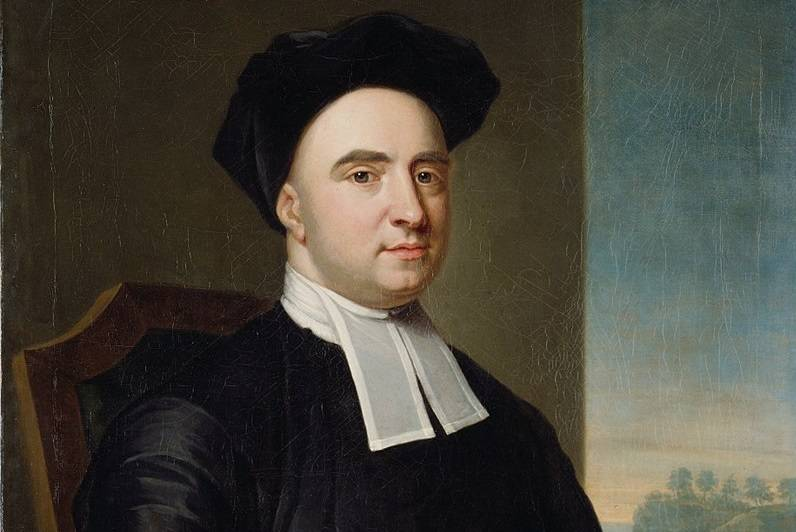
According to 18th century Irish philosopher George Berkeley, it most certainly does not. At first glance, idealism—or the concept that reality is made up of mind or consciousness—seems straight out of a fantasy book. In fact, most don’t even consider the possibility: they solely debated if the world was solely physical or if there was a mental component as well. What most do not do is even consider the outlandish possibility that the existence of our world is dependent on perception.
Berkeley’s genius lies in the fact that his concept of idealism continues to find relevance in contemporary philosophy. While idealism was originally invented with a quasi-theological intent (God as the constant perceiver), we can see now the inherent tie-in Berkeley’s work has with the philosophy of the mind, in particular the hard problem of consciousness developed by Thomas Nagel. Berkeley’s idealism can be read as an early response to the hard problem of consciousness: by treating mind and conscious experience as metaphysically fundamental, Berkeley dissolves the apparent explanatory gap between physical processes and subjective experience rather than trying to bridge it.
Subjective Idealism
“Esse est percipi—”to be is to be perceived. This short phrase captures the root of Berkeley’s idealist philosophy. Like many thinkers of his era, Berkeley was heavily influenced by empiricist concepts, such as John Locke’s idea of primary and secondary qualities. Take for example fire. A fire can be both warming and comforting to the hand but also scorching and harmful. Both of these qualities do not exist in the fire as primary qualities—that would be something like the shape, shape, and motion—they are the secondary, mind-dependent qualities. What we are acutely aware of are not the intrinsic qualities of something, but our experience of them—ideas.
Thus, whenever one directly experiences something, they experience the secondary qualities. Take the experience of looking at a tree. Berkeley and Locke would say that one is looking at an idea of a tree, not the thing in itself. But here is where Berkeley diverges from Locke. As part of his “qualities” argument, Locke would agree that while we have the idea of the tree in our minds, some physical component of that belief exists as well. This physical component supports our ideas, Locke would argue. However, Berkeley questions this: if there is a “material substance,” do we ever perceive it directly? The answer is no—rendering Locke’s claim that material things exist as lacking logical depth.
To this, the materialist responds that ideas simply represent physical things. That doesn’t mean physical things don’t exist, just that they can’t be sensed directly. In response, Berkeley turns Locke’s secondary qualities back on him. If empiricists like Locke already admit that certain things are “user-dependent,” like warmth, then rationally, all sensible qualities should be secondary qualities. Because all qualities, even the supposed “primary” ones like motion and size, depend on the perceiver, there are no supposed objects in themselves.
Thus, Berkeley reaches his conclusion. To better illustrate this point, begin by thinking about an apple. Easy, right? Now think about an apple with shape. A little harder, but it can be done. Then without color and shape. This would be an invisible apple, but maybe you can still feel its weight, and smell its scent. Finally, think about an apple without any apple-like attributes. This surely must be impossible. That last scenario is what Berkeley argued matter to be: nothing without our perceptions. Thus, you either strip matter of all sensible qualities, like we just did, meaning that “nothing” exists as a thing, or you admit that everything you actually know is mental. To hammer this point home, he gives one more justification, called the master argument.
- To start, try to imagine a tree that exists unperceived.
- The moment you do that, the tree exists perceived—in your own mind.
- Thus, one can never actually succeed in thinking of a truly unperceived tree.
Putting all of this together, we come to several conclusions. First of all, we only perceive ideas of things, not the things-in-themselves. Additionally, the idea of “abstract” matter-in-itself, which we disproved with the apple example, is not a real idea that we can form. Next, we can’t even coherently conceive of unperceived objects, as we see with the master argument. Hence, because reality is solely dependent on the observer, all that must exist are ideas and minds, which is idealism.
The Hard Problem of Consciousness
Developed by philosopher Thomas Nagel, the hard problem of consciousness (HPC) is an argument for a non-materialist world view. In it, Nagel argues that even if we mapped our entire brain to a bat’s brain, then we would still not know what it is like for a bat, to, for example, experience echolocation. His conclusion states that while objective, third-person science may explain mechanisms of the brain, it cannot capture the first-person essence of experience. Thus, the “what-it-is-like” dimension of consciousness—qualia—is inherently resistant to reduction, suggesting that reality contains aspects beyond the physical.
Idealism solves the HPC
The HPC is a struggle for two reasons. First of all, the subjective experience of life, qualia, seems excruciatingly difficult to deny. Thus, the problem forces one to admit that non-physical aspects of the world exist. Yet, this forces one into another problem—that of deciphering connection between the physical world and metaphysical entities. If one limits themselves to materialist vs dualist views, then they find themselves struggling with one of these two problems. But while certainly not the most intuitive, idealist views like Berkeley’s pose a solution to the HPC: reject the physical altogether, allowing a subjective factor of experience to exist without having to “bridge the gap.” Berkeley said that the only thing that exists is minds. If that is true, then not only does subjective experience exist, it is in fact the only thing that does exist. With this argument in mind, let us jump into the counterarguments.
Problem of individual consciousness
Idealism posits that reality is fundamentally made of mind or consciousness-like substances. Yet, we can also agree that consciousness is an inherently subjective concept. We aren’t a hive mind, and we don’t have a shared consciousness. This is something as core to our understanding of ourselves as the fact that we have a consciousness in the first place. Thus, idealism runs into its own hard problem: how do distinct conscious entities emerge from a reality completely made from the mind? How can we justify what makes my experiences mine and yours yours? How can individuality exist, and what demarcates it?
Berkeley originally solved this problem by stating that God creates billions of finite minds, which are all of us. However, I don’t think that a theological mechanism is needed to dispel this issue. First of all, even though opponents of idealism label “individual consciousness” as a “hard problem” of idealism, I’d argue that doing so is really just throwing the phrase “hard problem” around. The original HPC is so interesting not because it hasn’t been solved, but because it essentially is resistant to any solution. Bridging the gap between physical matter and qualia requires subjectivity to be described in objective terms, which as far as we know is impossible to do. But on the other hand, this “hard problem of idealism” is merely due to a lack of knowledge. We don’t know how individual consciousness arises, yet, we don’t have definitive evidence to prove that individual consciousness can’t arise from an idealist world view. Thus, while a problem, the concept of distinct consciousness is not detrimental to idealism’s solution to the HPC.
Idealism simply relabels the hard problem
Another prominent counterargument is that idealism merely restates the HPC without actually solving it. While materialism at least attempts to solve the HPC through modern neuroscience, idealism just presupposes consciousness as the basis for reality—without lending any hand to what that base level is. Some may argue that this feels like giving up rather than explaining anything. Further, even if we accept that everything is mental, we can still ask: why do my experiences have the particular structured, lawlike character they do? We have certainly explained much of the brain’s role—albeit not consciousness—with science, which is dependent on a physical reality. Scientists and neurologists have determined many things regarding the activity of the brain which neatly match our lived experience of the mind. Here, the question reappears. The critic might still ask, “why does the mind have these specific qualitative states and these specific regularities rather than others?” While modern science doesn’t completely solve these questions, idealism doesn’t even attempt to answer.
Yet, I’d argue that materialism employs this same trick. It’s interesting: while we don’t know what consciousness is, the same argument can be made regarding our knowledge of matter. Ancient Greeks thought that the smallest particles were atomos—uncuttable, tiny atoms—that differ in shape or size. In the early modern age, it was thought that all matter was made of indivisible atoms of different elements. Now, we hypothesize that the smallest known particles are quarks and leptons. But what’s the proof that our theory of the smallest particle will not continue to evolve? We can neither define what matter truly is, nor what it is in itself. Materialism fails to explain what matter is at its most fundamental state. Idealism doesn’t even pretend to explain what consciousness is: it just supposes it as the base level. To insist that doing so is a problem for idealism but not for materialism is contradictory. I’d argue that the reason materialism isn’t questioned as heavily for this issue is because matter is just something we assume to know more about. It seems less ambiguous, lending itself as the basis to metaphysical theories more easily. But because philosophy is the process of undermining presumptions, the assumption that we know more about matter versus consciousness shouldn’t swing the pendulum either way. The fact of the matter (haha, get it) is that all metaphysical theories presuppose something to exist, and attacking that starting point backfires for materialists.
What now?
I hope that this post doesn’t come across as a full-blooded defense of idealism. Doing so would take far too long, as idealism, like any other theory, has its fair share of contradictions and inconsistencies. However, in the last 1500 words or so I’d hope that I at least posed one valid solution to the HPC, regardless of how cogent it is. Finally, regardless of whether one agrees with Berkeley’s views, I hope they can realize how many of our theories come from the assumption that matter comes first. Once we can realize that bias, we can move forwards towards finding a theory that solves the HPC once and for all.