
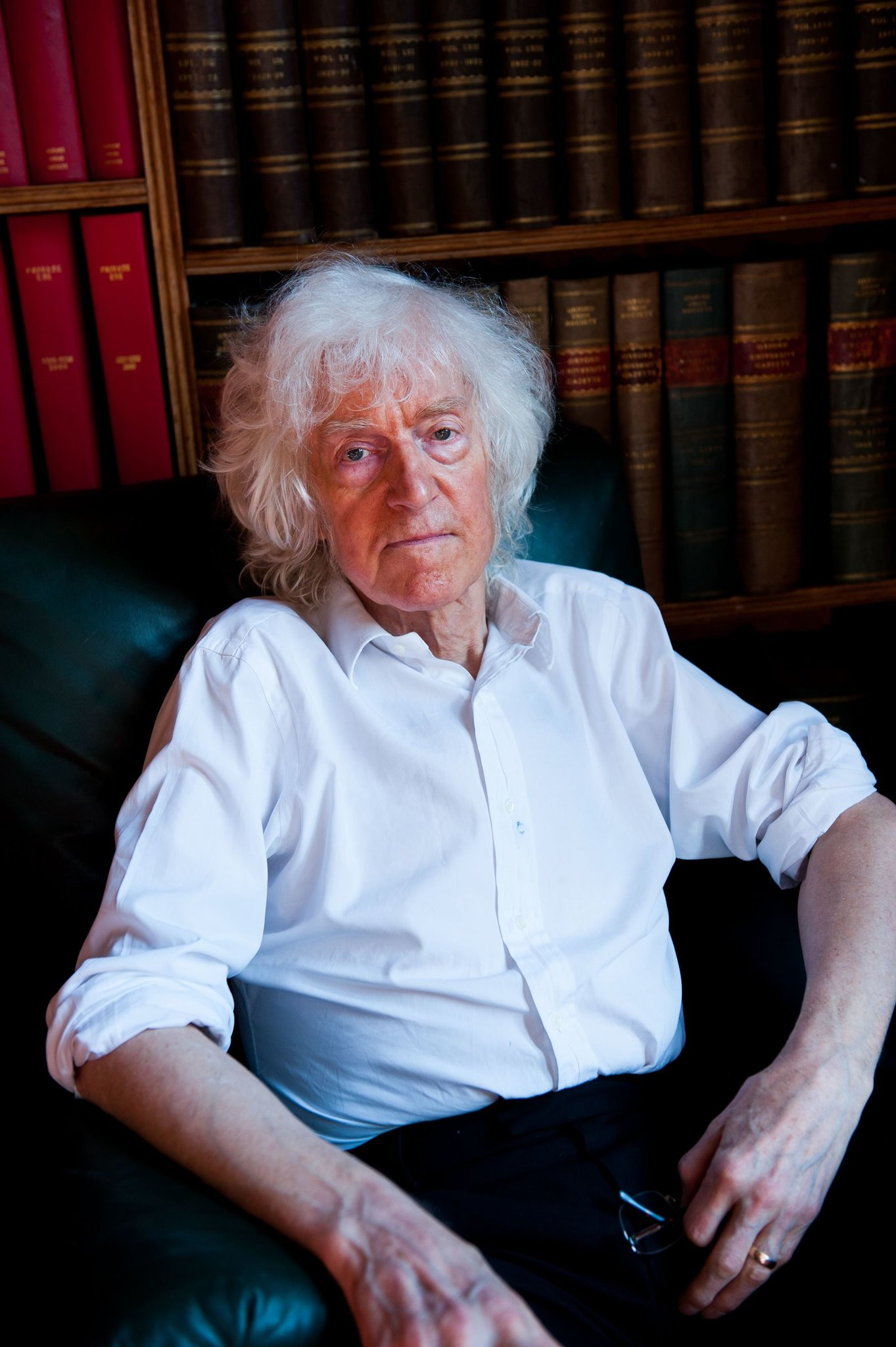
Derek Parfit’s non-identity problem is one of the most famous in the branch of philosophy called population ethics. In short, Parfit challenges the commonly held belief that present day actions can harm future generations. Here is how Parfit does it:
The Problem
Premise 1: If an action determines existence, there’s no alternative where that same person would have been better off.
This is just a flushed-out version of the butterfly effect—the idea that a small change in initial conditions can lead to large, unpredictable consequences.
Premise 2: An action harms a person only if it makes that person worse off than they otherwise would have been.
To be harmed is to end up worse off than the relevant alternative So, for example, if one is punched, one is worse off compared to how they were before being hit.
Premise 3: In many reproductive cases, the identity of the person depends on the action taken.
This statement simply combines the above two facts. Think about how your parents met. Say they started talking at a bar at 8pm on a Thursday night. If your mother had arrived just an hour later, there is a good chance they wouldn’t have met. Seemingly meaningless interactions can lead to massive consequences down the road.
Impersonal Ethics
To apply this mode of thought to the non-identity problem, imagine a person who decides to create an anti-environmental regulation policy that strips certain countries of safeguards meant to protect the atmosphere. It’s easy to say that this policy harms future generations. What’s harder to do is prove that it actually does. If the creation of that policy had an effect on the policy-makers life, which it undeniably did, then it must have also played a deciding factor in the existence of people who would not have been born otherwise. In other words, if not for that environmentally disastrous policy, the people hurt by it wouldn’t have been born to suffer for it. Therefore, it is difficult to say that they were harmed by that policy—since without it, they wouldn’t exist.
As it so often appears to be the case in philosophy, the problem here is finding a way to reject this seemingly paradoxical outcome. Can we really just say that polluting the environment isn’t doing harm to future generations? Although Parfit may have given us a way to absolve ourselves of responsibility, it still feels wrong to do. That’s a problem. Especially for ethical matters, our intuition often serves as a powerful compass. In this paper, I’d like to show a nifty way to evade Parfit’s trap—and display that we need not eschew our instinctive moral reasoning.
The best way to attack the non-identity problem is through the second premise: that which states that harm is defined by an action that makes one worse off then they could have been. Although this makes sense at first glance, there are some serious problems with this definition. This definition enters a moral gray area when one starts talking about unborn people. The non-identity problem rests on the fact that one can’t be harmed if they wouldn’t be otherwise—i.e, they wouldn’t exist otherwise. Can we really say that just because one wouldn’t have existed otherwise that they cannot be harmed?
In order to combat this, it calls for a shift from person-based ethical decision-making to impersonal decisions. Instead of basing our decision on the specific person before and after conception, and the fact that their conception must have been caused by previous actions through the butterfly effect, we must consider the expected consequences for the entire population of people being born, not just a single individual.
Ideas like this have been consistently supported. For example, if we adhere to Parfit’s strict definition of harm, we would have to admit that at least a bit of identity is formed before birth. This is the only way that one can justify harm being done to the same person before and after birth. But do we really develop a distinct, individual personality while in the womb? This seems like a little bit of a stretch, something that requires strong criteria for identity-formation.
Parfit himself seemed to reject this idea as well. In Reasons and Persons, Parfit wrote that the traditional definition of identity is contradictory and is more of a cultural development than an actual concept. In place of identity, Parfit argued for something called “psychological continuity,” or the idea of the importance of a continuous chain of mental states. Depending on one’s definition of “mental states”, it is plausible that those develop before birth. The question, then, becomes if those nascent intentions and beliefs signify a strong enough indicator of a “mental state”. If we reject pre-birth “personal identity” as too strong an assumption, the natural replacement of a 1-1 theory is an ex ante, population-level standard.
Following this, the rule then becomes “choose the actions that make the world the best for any child, regardless of who the actual child is.” Hopefully, this is what one would do intuitively—we have seemingly just proven the obvious.
The Setback Principle
However, this only solves half of the problem. The non-identity problem creates two related but distinct issues: that of creating policies that “harm” future generations, but also what I’ll call the “evil doctor” paradox. Let’s say that in order to commit some type of fictional insurance fraud, a mother goes to the lair of an evil doctor to have him select the exact sperm that carries the trait of a life-threatening disease. Putting biological accuracy to the side, imagine that plot succeeds. Josh is born into the world with sickle cell anemia, ensuring that he will live a life plagued by heart problems, anemia, and painful crises. Yet, without the evil doctor, Josh wouldn’t have existed in the first place. The doctor is in fact the sole reason that he exists—he was selected due to the disease that his sperm carried. I’m sure one can see the non-identity problem that arises here: the doctor and mother are decidedly evil, yet, did they actually cause Josh any harm?
Our previous solution fails here because Josh was “chosen” for an exact reason. Therefore, we need something a little more specific than simply “making the best world possible for future generations.”
The first repair we must make is to abandon the idea that all harm must be comparative in that strict person-indexed sense. We can call this the setback principle: the idea that an agent harms another when they impose a severe, foreseeable setback to the person’s basic interests, even if that person wouldn’t have existed otherwise. By basing harm off of interests—which are general to some extent—and not true character, this allows us to justify the fact that Josh was harmed. A better version of Josh may have existed, but the fact is that the evil doctor and mother still brought a child with a grave impairment into the world.
To this, defenders of Parfit may argue that Josh’s life is still worth living, and therefore, he couldn’t have been harmed as a life with sickle cell disease is still a good life. Yet, we can admit that Josh has a meaningful, worthwhile life and still concede that he was harmed. To illustrate this point, let’s think about a surgeon who performs a non-urgent operation in a reckless way. He breaks your arm but also incidentally cures a long-standing problem, leaving you overall better off and glad about the outcome. You can coherently say both “My life is better” and “You wronged me by breaking my arm.” In this example, “breaking an arm” is sickle cell, and “curing the long standing problem” is the sanctity of life. Things just aren’t so binary: someone can both be given the chance to live and still be harmed in their pursuit of a good life.
Conclusion
While convincing at first glance, Parfit’s non-identity problem gives harm too narrow of a definition—a definition that allows Parfit to hammer home his point without much pushback. But in order to truly represent what it means to wrong someone (or be wronged), a broader definition of harm must be used. With this latter definition, the Non-Identity Problem turns out to be less of a paradox than it first appeared to be.