
Introduction
Compared to the relativity of English and History, Mathematics has always been seen as a domain with clear truths. There is no subjectivity in Mathematics; there is just a right or a wrong. An inquisitive person would question what sets Mathematics apart from the overbearing reign of human subjectivity. The answer, a Platonist would argue, is that mathematical relationships are themselves independent of the human mind, existing in some sort of non-physical, abstract realm. Mathematical Platonism, loosely based on the teachings of Plato, holds that we discover numbers rather than invent them. Despite their ingenuity, the creators of the fundamental formulas of calculus never really created anything, the Platonist would argue. The fact of the matter is that there is nothing to create, only math that society discovers.
The Mathematical Nominalist would disagree, rejecting what the Platonist proclaims as a “discovery.” How does one go about gaining knowledge of these non-physical, immutable identities? In addition, how does one justify this abstract, non-physical reality numbers exist within? This is called the epistemological argument of the Nominalists: Since numbers are defined as strictly non-physical and non-mental, it seems impossible for humans to have any way of discovering them.
However, we know that the epistal argument is not true; in fact, most humans have been taught the use of mathemental concepts, so numbers must have come from somewhere. So how do we solve this paradox? Mark Balaguer, a philosopher at California State University-Long Beach seems to have come up with an answer. While Mathematical Platonism posits that math is not invented, this runs up against the challenge regarding from what realm math, as an abstract, non-physical entity is discovered. Balaguer’s Plenitudinous (i.e., infinite) Platonism suggests that all possible mathematical structures already exist. Rather than discovering specific objects, mathematicians simply explore pre-existing systems—thereby resolving the epistemological problem while preserving Platonism at its core.
Historical Background
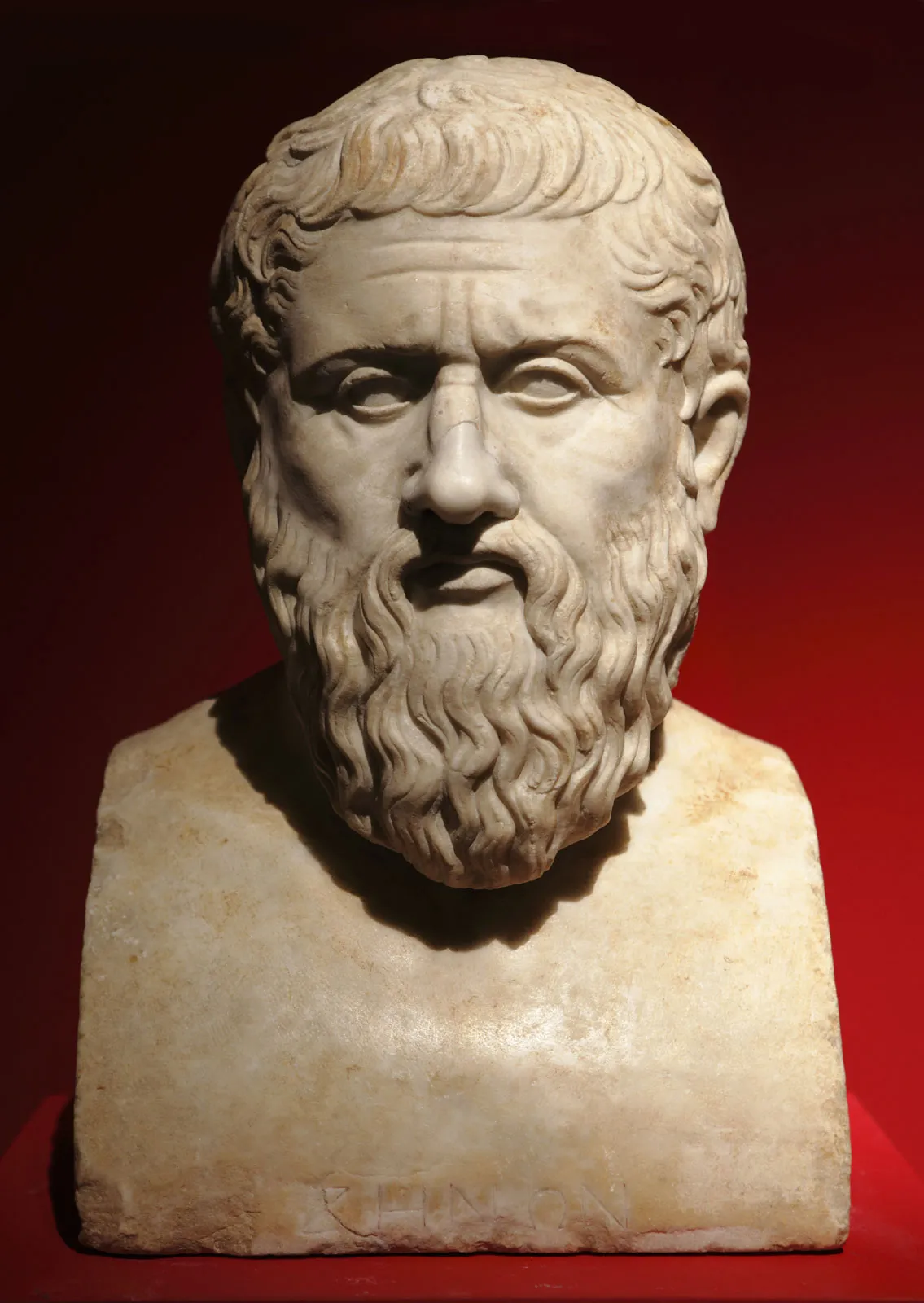
Platonism, or Plato’s philosophical system, is related to but not exactly synonymous with what is now known as Mathematical Platonism. Plato himself believed that numbers exist independently of the mind, albeit using a very different, outdated argument. In his theory of the realm of the forms, Plato proposed that our soul exists before our physical body. In the time between our soul’s conception and our actual birth, our soul was acquainted with everything, including all knowledge of mathematical sets and numbers. A famous example of this Platonistic approach is a dialogue between Socrates and a slave in Plato’s Meno. Socrates asks the slave to double the area of a square. Although the slave has close-to-no mathematical intuition, when Socrates, “helps the slave to work out the reasoning, and thereby see the way in which the unexpected answer was implied by other true beliefs that [the slave] already had,” the slave was able to solve the problem himself. Key to this example is the fact that Socrates does not explicitly teach the slave anything. Instead, he assumes the role of a facilitator, helping the slave rediscover knowledge that his soul had already learned while in the realm of forms. Therefore, learning math is simply remembering the forms with which the soul was initially acquainted.
Modern Platonism, although sharing the same name, differs from Plato’s initial theories. Key to modern Platonism is reduction theory. According to the Stanford Encyclopedia of Philosophy, Reductionists hold that higher phenomena can be reduced to simpler phenomena or physical processes. This argument is crucial to the Modern Platonist argument, because if math can be reduced to something like set theory, then all one needs to explain is how set theory itself exists outside of the human mind and how humans access this knowledge.
Pro-Platonist Arguments
The most popular pro-Platonist argument is rooted in the work of German philosopher Gottlob Frege. Frege’s thoughts are based on two pre-existing statements, that of Classical Semanticism and of what he calls mathematical Truth. Classical Semanticism argues that since we refer to numbers in a way that we would talk about objects—for example, “eleven is prime”— numbers are in fact real. His notion of Truth is relatively simple—Frege argues (and most people would agree) that all mathematical theorems are inherently true. From there, we can see that if mathematical theorems are true, and their truth requires some reference to mathematical objects, then mathematical objects exist.
Another prominent defense of Platonism is the Quine-Putnam indispensability argument. The logicians’ argument rests on the indispensability of math to our most important scientific theories. According to them:
1. We should adhere to the entities required in our most advanced scientific theories. (Basically, if science says it exists, it exists.)
2. Mathematics is inherent and indispensable to aforementioned theories.
3. Therefore, we ought to believe in the existence of mathematical abstract entities.
As a society, if we accept science as the most accurate way to describe the understanding of our world, and math is the essential to science, then we should be committed to the existence of Mathematics outside of the human mind.
The Nominalist’s Viewpoints
Frege and Quine’s arguments scratch only the surface of the mathematical Platonism versus nominalism debate. The nominalist rejects the arguments of both Frege and Quine because neither of them have any way of reconciling the fact that although numbers exist, it is impossible for humans to gain access to abstract numbers since humans are strictly physical and mental. In other words, the common epistemological argument is:
- Humans exist entirely within space-time.
- If there exist any abstract objects, then they exist entirely outside of space-time.
- Therefore, humans can never acquire knowledge of abstract objects.
Even if objective mathematical entities do exist, there is a metaphysical gap between them and us. A similar argument is outlined by David Builes in his article “Why Can’t There Be Numbers?”. He bases his argument around the existence of “bare particulars,” or theoretical properties that have no shape, color, or mass. His argument is:
- Necessarily, there are no bare particulars.
- If there are mathematical objects, then there would be bare particulars as they exist in an non-mental and non-physical realm.
- Therefore, there are no abstract mathematical objects.
Builes’s argument, while still relevant, is far less concrete than the common epistemological argument. The existence of bare particulars in the first place is heavily debated. In addition, even if bare particulars exist, many philosophers would push back on the belief that numbers can be classified as these entities.
The common epistemological argument and Builes’s work, both representing the Nominalist viewpoint, bring up a key issue with Platonistic theory. Whether one decides to call them bare particulars or simply abstract objects, it makes no difference—humans cannot gain access to either. With this background, we come to the crux of the argument that Platonists attempt to disprove: How do we prove that humans are able to access seemingly inaccessible numbers?
Defeating the Epistemological Argument
The first strategy to attack the problem posed by the Nominalist would be to reject the first premise of the argument, that the mind is not fully physical, and therefore the brain can indeed somehow access non-physical realms. This is the sort of argument historical Platonists would have made—it is very in line with Plato’s theory of forms and the concept of how the soul learns abstract objects before birth. While this view is not commonly supported in the modern day, Logician Kurt Gödel agreed with it—stating that “I don’t see any reason why we should have less confidence in this kind of perception, i.e., in mathematical intuition, than in sense perception.” What Gödel meant by this is that math is like our sixth sense—our intuition regarding mathematics and numbers is no different than how we would perceive the color blue or taste a popsicle. However, this explanation hinges on some sort of mystical or non-natural concept of a soul which is completely unverifiable. It also contradicts the naturalistic worldview, which assumes that all knowledge is grounded in physical or logical processes. If one believes in the concept of a soul, however, this argument is most convincing.
Another strategy would be to reject clause number two of the epistemological argument—that although mathematical arguments are abstract, they can exist in space and time and be interacted with casually in some sort of way. This argument has been developed by UC Irvine professor Penelope Maddy. Maddy supported a similar conclusion to Gödel, however, she wanted to base her argument off of logic instead of the less philosophically respectable concept of “intuition.” This is why Maddy developed her theory of set-theoretic-realism, in which she attempted to prove that some mathematical entities are actually perceivable. Set theory is the branch of mathematics that describes the relationships among collections of objects. Reductionism is fundamental to Maddy’s approach. If sets are able to be perceived, then they are representative of mathematics as a whole. However, if the perception of a set is a physical phenomenon, it should have a physical explanation as well—Maddy relies on the work of the Physiologist Hebb’s claim that “we can and we do perceive sets, and that our ability to do so develops in much the same way as our ability to see physical objects.” While this exact theory is not crucial to our understanding, the very fact that it exists as some type of groundwork for scientific interpretation is important to the development of future arguments. Essential to Maddy’s theory is the distinction between perception and sight. Take for example this classic optical illusion: Which do you see, an old lady or a young girl? (See Appendix)
A person on different days may perceive the image in different ways—however, the image does not change. Illusions like this show that perception and sight are entirely different processes, which is a fundamental insight, since the abstract qualities of numbers cannot be directly seen. Therefore, if we have proven that perception does not directly hinge on sight, how could one perceive a set of numbers?
Maddy’s classic example is a cart of twelve eggs. When one buys eggs and opens the box enough times, one begins to perceive the number twelve without counting. In simpler terms, when one opens the carton, one begins to perceive the set of twelve—or the concept of “twelveness” as a unit. This perception is independent of counting, one just perceives a set as a singular object representing the notion of twelve.
Despite this convincing argument, Maddy’s work is anything but complete. First of all, numbers are not perceived directly—an apple does not have a single numerical identity because it could represent an Avogadro’s number of atoms (heaps problem). That is, because it contains many different numerical values of things (like atoms, or molecules, or colors), we cannot say that it directly instantiates a number. Although Maddy posits that we can perceive a “mathematical set” of numbers with the egg carton analogy, this seems like somewhat of a stretch. The fact that we can tell the “twelve ness” of an egg carton could be nothing more than everyday groupings. In short, Maddy claims sets are perceptible, like physical objects, but many would argue that she conflates common groupings with mathematical sets, and that what’s actually perceived is classification, not set-hood.
One of the most promising strategies against the epistemological argument is to accept its first two premises—that mathematical objects are non-empirical and inert (they exist outside of space and time and cannot interact with human minds), and that human knowledge usually requires causal contact. However, Balaguer’s theory rejects the third premise of the epistle argument, which states that we cannot know mathematical truths. Balaguer has popularized this approach, which he calls “Plenitudinous Platonism.” The argument has gained support because it is especially designed to solve the epistemological problem. In addition, Balaguer’s theory differs from both Gödel’s and Maddy’s on the basis that followers of the argument would deny that humans have some sort of way of engaging with abstract objects.
Plenitudinous Platonism, or PP for short, relies on one large assumption. Balaguer posits that all possible mathematical entities exist independently of human thought, even if no human has had a thought about it yet. Therefore, humans do not need access to numbers which exist in an abstract realm—they only need to choose axioms and define theorems that can describe the mathematical world. Plenitudinous—based on plenitude—means an abundance, which signifies the infinite scope of possible mathematical universes with their own axioms. Based on this assumption, the epistemological problem is defeated. If PP is accepted, then humans are free to create and explore any possible mathematical theory. Because if every consistent theory corresponds to a real structure, then whenever we invent a mathematical system that is internally coherent, we automatically refer to pre-existing objects. Thus, under PP, mathematical knowledge is basically “specification knowledge”—as long as one can specify a consistent system, they can thereby know truths about real objects. Put into action, here is an example of Balaguer’s theories:
Say for example you are creating a game where there are two rules surrounding the mythical animals Zorps:
- Each Zorp must have exactly 3 heads.
- Each Zorp can be blue or green.
Balaguer would say that as long as your rules are logically non-contradictory (which they are), then somewhere in the infinite realm of abstract things, Zorps exist. Zorps were not created—they always existed somewhere in the realm of abstractness. But what has been created is a consistent set of rules, which now describe the Zorps which have always existed. Key to this example is the fact that one does not need to touch or see a Zorp, just specify a set of rules.
Counterarguments to PP
Balaguer’s PP is certainly a long-winded approach, and Theoretical Parsimonists—or followers of the belief that the simplest solution is the best—would have a field day ripping it to shreds. On one hand, the crux of the argument is that it is ontologically wasteful—the theory that infinite mathematical systems exist seems unnecessarily complicated and convoluted. In fact, Occam’s Razor directly states that “plurality should not be posited without necessity,” meaning that we should avoid considering unnecessarily complicated systems. It is much simpler to accept that only one consistent mathematical system exists. Some would even argue that no mathematical system exists at all—and that mathematics is a language we have created. Regardless, the Parsimonist would question why we need to commit ourselves to a Platonic mess of abstract realms when we can just accept the hypothetical utility of numbers.
In addition, there is the large problem of contradiction. If all possible mathematical sets can exist at the same time, what prevents contradicting theorems from being implemented? The very first line of this research paper praises math for being objective—but PP seems to offer a loophole.
This paper will now address the problem presented by Occam’s Razor. The Parsimonist argues that PP is too complicated because it explores an infinite number of mathematical systems. However, mathematicians in common practice have no problem doing this. If we want our philosophy of mathematics to respect the very same mathematical practices we use, we should account for all logically possible structures. In short, PP fits the practices of real-world mathematics better than theories that deny the existence of infinite mathematical structures. Additionally, although it may seem “wasteful” at first glance to argue that all possible mathematical structures exist, Balaguer himself argues that “Once you believe in any abstract objects (even just the number 2), the “cost” of adding infinitely many is not that much bigger.” In other words, the abstract realm itself is already weird and immeasurably large—so adding more to it (i.e, extending to infinity) should not be that big of a problem. Lastly, Occam’s razor is and always will be nothing more than a guide. If all problems simply required the simplest solution, the world would be a whole lot easier to understand. PP solves nearly all of the problems facing the Platonist, such as epistemology and explaining mathematical objectivity. A parsimonious theory may be simpler, but if it cannot reconcile all of these issues, it cannot be superior.
Conclusion
The most plausible argument for the existence of abstract numbers that are independent of the mind is Mark Balaguer’s Plenitudinous Platonism. Balaguer’s theory allows the Platonist to escape one of the most fundamental problems facing mathematical Platonism in general—the epistemological problem. By positing that all sets exist, Balaguer circumvents the need for an interaction with non-mental and non-physical objects when we know we as humans precisely cannot do both of these things. If all possible numbers and sets exist, it falls on the mathematician to pick axioms and create theories that describe these sets. By shifting the burden on the Platonist from discovery to selection, PP redefines mathematical Platonism in general as an act of exploration into a pre-existing landscape. This reframing therefore renders the epistemological problem less relevant. If all possible mathematical structures exist, our direct ability to access them becomes less of an issue. The universal existence of mathematics points toward a reality that transcends the human mind. Platonism, especially in its plenitudinous form, best accounts for this.
Appendix:

Bibliography
Balaguer, Mark. Platonism and Anti-Platonism in Mathematics. Oxford: Oxford University Press, 1998.
Benacerraf, Paul. “What Numbers Could Not Be.” The Philosophical Review 74, no. 1 (1965): 47–73. https://doi.org/10.2307/2183530.
Builes, David. “Why Can’t There Be Numbers?” The Philosophical Quarterly 72, no. 289 (2022): 1–17. https://doi.org/10.1093/pq/pqab050.
Field, Hartry. “Is There a Good Epistemological Argument Against Platonism?” Philosophical Quarterly 45, no. 180 (1995): 1–10.
Frege, Gottlob. The Foundations of Arithmetic: A Logico-Mathematical Enquiry into the Concept of Number. Translated by J. L. Austin. Oxford: Blackwell, 1950.
Gödel, Kurt. “Some Basic Theorems on the Foundations of Mathematics and Their Implications.” In Collected Works, Vol. 3, edited by Solomon Feferman et al., 304–323. Oxford: Oxford University Press, 1995.
Hebb, D. O. The Organization of Behavior. New York: John Wiley, 1949.
Maddy, Penelope. Realism in Mathematics. Oxford: Clarendon Press, 1990.
Ockham, William of. Summa Logicae. In Opera Philosophica, edited by Philotheus Boehner et al., vol. 1. St. Bonaventure, NY: Franciscan Institute, 1974.
Philosophy of Mathematics: The Epistemological Argument Against Platonism. Encyclopaedia Britannica. Accessed April 30, 2025. https://www.britannica.com/science/philosophy-of-mathematics/The-epistemological-argument-against-Platonism.
Putnam, Hilary. “Philosophy of Logic.” In Mathematics, Matter and Method, 323–357. Cambridge: Cambridge University Press, 1979.
Quine, W. V. O. “On What There Is.” Review of Metaphysics 2, no. 5 (1948): 21–38.
Ragsdale, Bruce. “Plato’s Meno—the Geometry.” Department of Mathematics and Statistics, McGill University. Accessed April 29, 2025. https://www.math.mcgill.ca/rags/JAC/124/meno.pdf.
Stanford Encyclopedia of Philosophy. “Indispensability Arguments in the Philosophy of Mathematics.” Last modified April 29, 2025. https://plato.stanford.edu/entries/mathphil-indis/.
Stanford Encyclopedia of Philosophy. “Platonism in the Philosophy of Mathematics.” Last modified April 29, 2025. https://plato.stanford.edu/entries/platonism-mathematics/.